
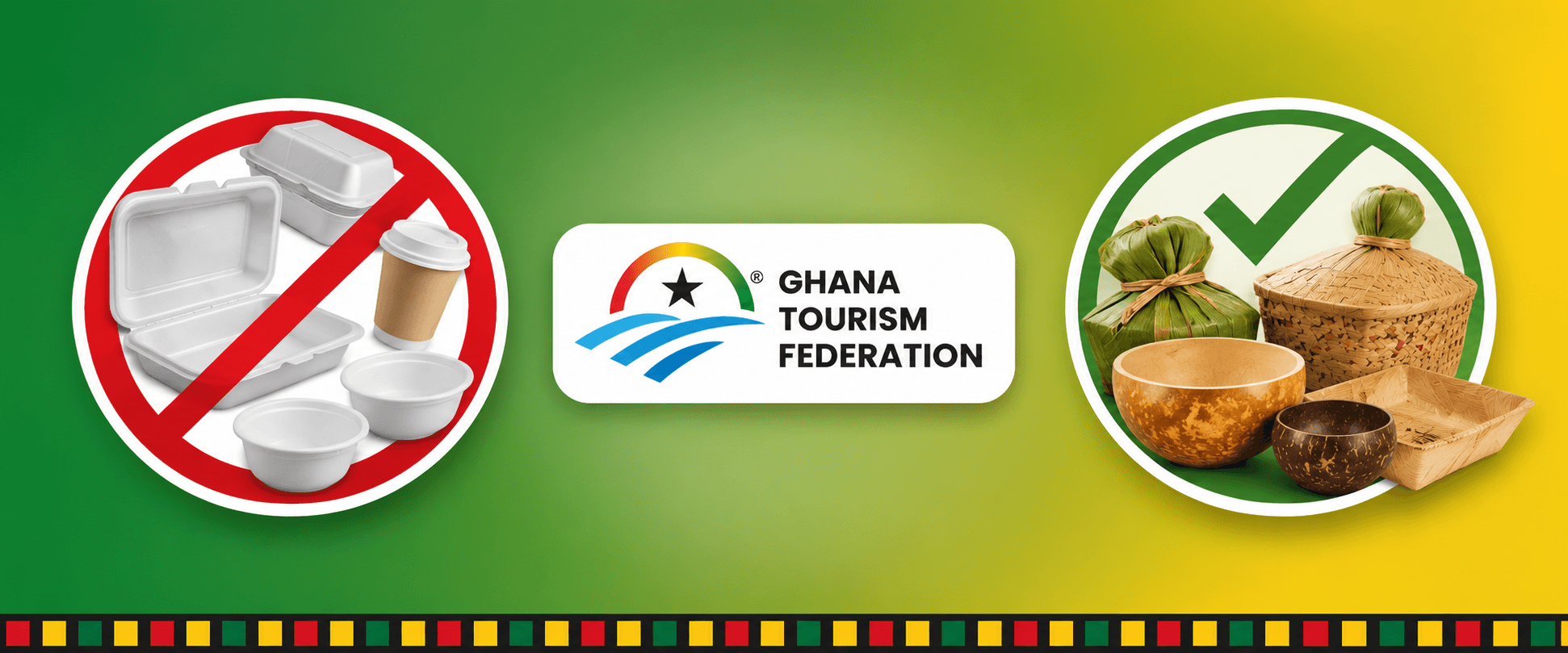
From January 1, 2027, Ghana will begin enforcing a nationwide ban on polystyrene foam products, commonly referred to as Styrofoam and widely used in disposable food packaging.
For hotels, restaurants, caterers and other businesses serving visitors, the deadline is fast approaching, and the Environmental Protection Authority (EPA) says there will be no extensions.
The policy forms part of Ghana's efforts to address plastic pollution, improve environmental sanitation and protect public health, with significant implications for the hospitality and tourism industry.
What the ban covers
The EPA's directive prohibits the production, importation, distribution, sale and use of polystyrene foam products, including takeaway containers, disposable cups and plates, foam packaging, insulation materials and foam mattresses. Certain medical, scientific, laboratory and diagnostic applications may be exempt, subject to regulatory approval.
The EPA has warned of confiscation and legal action against prohibited imports after the deadline. Businesses and manufacturers are therefore encouraged to prepare ahead.
What this means for Ghana's tourism industry
Tourism depends heavily on the quality of the environment. Ghana's beaches, attractions, food experiences and hospitality facilities all contribute to how visitors experience and remember the country.
Plastic waste threatens these assets, contributing to blocked drains, flooding and pollution across communities and coastal areas.
For hotels, restaurants, caterers, event organisers and food vendors, the ban means reviewing existing packaging practices and identifying suitable alternatives. However, affordability remains a concern, particularly for smaller operators. Access to practical and affordable alternatives will be essential to a smooth transition.
Sustainable alternatives with a Ghanaian identity
The transition also presents an opportunity to revisit materials that have long been part of Ghanaian food culture.
Plantain and banana leaves, corn husks, calabash bowls and clay pots offer possibilities for more culturally rooted food presentation. Modern alternatives such as bagasse packaging, paper products, palm-leaf plates and reusable containers can also support the shift.
These options offer hospitality businesses an opportunity to incorporate Ghanaian craftsmanship, culinary traditions and local materials into the visitor experience.
The way forward for the tourism industry
The January 2027 deadline presents an opportunity for Ghana's tourism and hospitality industry to take a more active role in environmental responsibility.
The President of GHATOF, Mr Seth Yeboah Ocran, has urged member associations and businesses across the sector to take note of the directive and begin transitioning towards environmentally friendly alternatives.
He has also called on the government to consider incentives and support for local manufacturers, particularly those currently producing polystyrene foam products, to facilitate their shift towards sustainable packaging. This would enable them to invest in appropriate technologies, adapt production processes and increase the availability of affordable alternatives, while helping to sustain existing jobs and protect livelihoods. Such support, he noted, would strengthen local industry and accelerate the adoption of sustainable practices across the sector.
GHATOF encourages its members to review their operations, engage suppliers and explore alternatives ahead of the deadline.
Ultimately, protecting the environment and promoting Ghana as a tourism destination should not be separate conversations. As Ghana prepares for January 1, 2027, the industry has an opportunity to lead by example, helping ensure that the Ghana we invite the world to experience today is preserved for generations to come.
Accra, November 3, 2026 | By Souad Ewurama Arhin | Ghana Tourism Federation (GHATOF)